Clinic Patient Enquiry Follow-Up: A Simple Plan
A simple, step-by-step plan for clinics to reply fast, assign an owner and follow up on every patient enquiry so fewer bookings slip away.
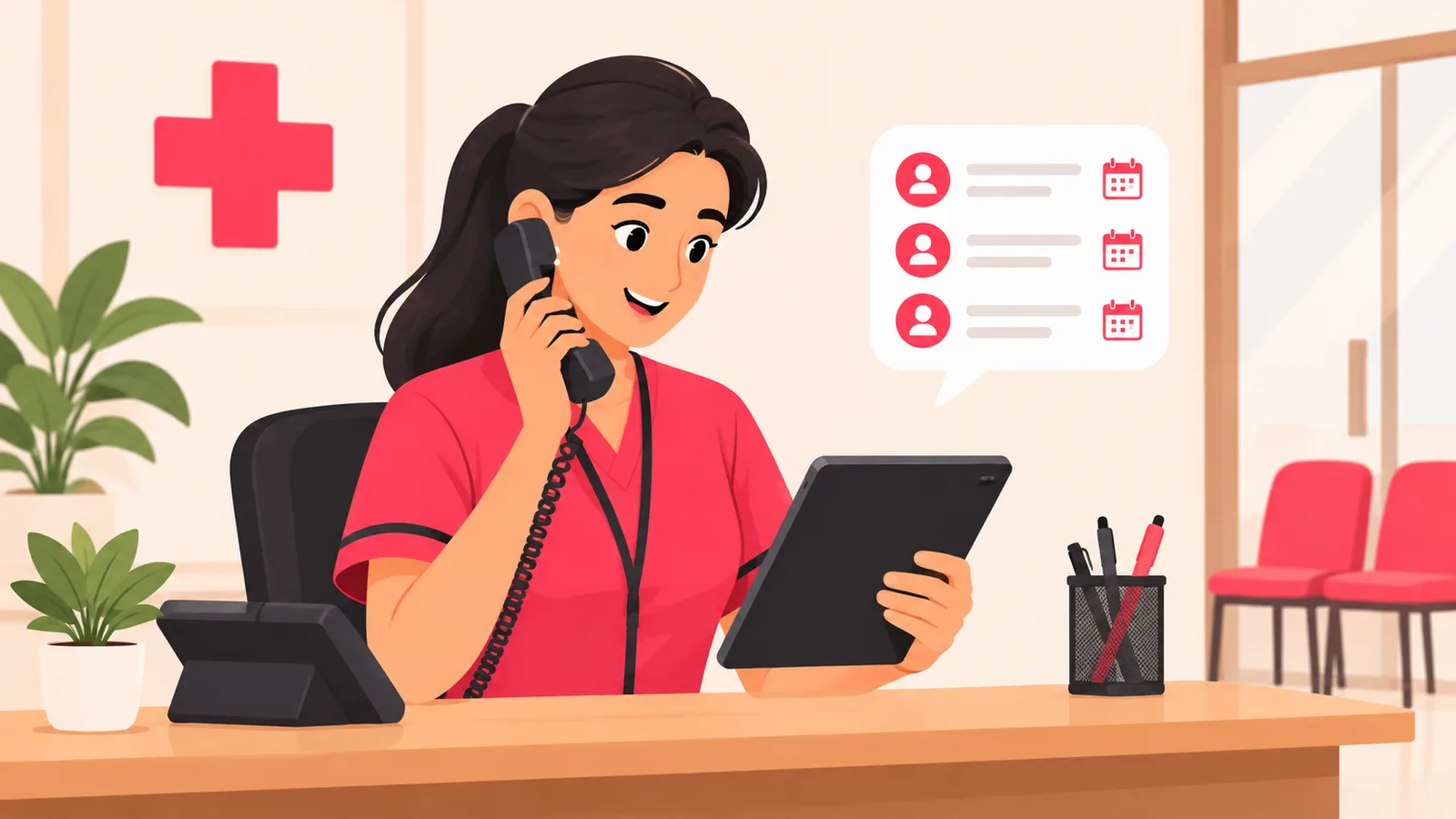
Clinic patient enquiry follow-up is simple to describe: every person who calls, messages or fills a form gets a named owner and a next step. Most small clinics skip this. Enquiries arrive on the front desk phone, WhatsApp and a website form, and some of them quietly disappear. This guide shows a plain system you can set up this week.
Why clinic enquiries go cold
A patient who sends an enquiry is usually comparing two or three clinics. They want a quick, clear answer. If nobody replies, they book somewhere else. They rarely tell you.
The common reasons enquiries get lost are easy to spot:
The receptionist is busy with walk-in patients and the call is not returned.
Enquiries sit in three places: the phone, WhatsApp and a form inbox.
Nobody owns the enquiry, so everyone assumes someone else replied.
The "I'll call you back" note lives on a paper slip or in someone's memory.
What counts as an enquiry
Treat all of these the same way: a call asking about fees or timings, a WhatsApp message asking about a treatment, a website form, a missed call, and a referral from another patient. If it could become an appointment, it is a lead.
Step 1: Put every enquiry in one place
You cannot follow up on what you cannot see. Pick one list, even a shared sheet to start, and record every enquiry the same day. Write down the name, phone number, what they asked about, where they came from, and the date.
If you already have a missed call problem, read our missed call lead follow-up plan. Missed calls are often the first enquiry a clinic loses.
Step 2: Give each enquiry one owner
One person should be responsible for each patient enquiry. In a small clinic this may be the receptionist or a patient coordinator. In a larger one, split by treatment or by shift. The point is that a name sits next to every enquiry. Our guide to lead assignment for small teams explains simple ways to do this.
Step 3: Reply fast, with a useful answer
Speed matters because patients compare clinics quickly. Aim to respond within a few minutes during clinic hours, and first thing in the morning for night enquiries. See our lead response time guide for realistic targets.
A good first reply does three things:
Greets the patient by name and thanks them for the enquiry.
Answers the actual question, such as timing, doctor availability or what the first visit involves.
Offers one clear next step, like "Would Thursday at 5 pm suit you?"
Be careful with medical advice
Your follow-up is about booking and information, not diagnosis. Keep messages factual and polite. Do not promise outcomes.
Step 4: Follow up on a fixed schedule
Most patients do not book on the first reply. Decide a rhythm and stick to it. Here is a sample you can adapt:
WhenActionSame dayCall or WhatsApp with an answer and an appointment slotNext dayA short WhatsApp nudge if there is no replyDay 3 or 4A call, and offer another slotOne week laterA final, friendly check-in
After the final check-in, mark the enquiry as closed with a reason, such as "not interested" or "chose another clinic". That reason is useful data later. Our WhatsApp lead follow-up plan has message ideas you can reuse.
Step 5: Follow up after the visit too
Enquiry follow-up does not stop at the first appointment. Many treatments need a second or third visit. Set a reminder for the next step: a check-up date, a review visit or a repeat consultation. Patients who feel looked after come back and refer others.
Step 6: Handle patient data with care
Enquiries contain personal details, and sometimes health information. Collect only what you need, tell people why you are collecting it, and limit who can see it. Our DPDP Act lead data checklist is a good place to start. If you are unsure about your legal duties, ask a qualified professional.
What to track each week
You do not need complex reports. Look at these once a week:
How many new enquiries came in, and from which source.
How many were replied to on the same day.
How many became booked appointments.
How many are overdue for a follow-up.
The overdue list is the most valuable. It shows exactly which patients are about to slip away.
When a spreadsheet stops being enough
A shared sheet works for a few enquiries a day. It gets harder when several staff share it, when enquiries come from ads and forms, or when reminders are missed. At that point a lead management CRM helps. LeadGo captures leads from forms and websites, assigns them to team members, reminds the team to follow up, tracks the pipeline and calls, and has analytics and a mobile app. Read how to choose a CRM to replace spreadsheets if you are weighing the move.
Sample scripts you can copy
Short, warm messages work best. Change the details to match your clinic.
First reply
Hello Priya, thank you for contacting our clinic. Dr. Rao sees patients Monday to Saturday, 10 am to 6 pm. Would Thursday at 5 pm work for your first visit?
Gentle nudge
Hello Priya, just checking if you had a chance to look at the slots I shared. I am happy to find another time that suits you.
Final check-in
Hello Priya, this is our last message about your enquiry. If you would like to book later, just reply here and we will help you.
Common mistakes to avoid
Replying with only "Call us". Answer the question first, then offer a slot.
Sending long messages. Patients read on their phones, so keep it short.
Forgetting the second contact. One reply is rarely enough.
Not recording the outcome. Without it you cannot learn which sources bring real patients.
Relying on memory. Use a reminder for every follow-up, every time.
FAQs
How quickly should a clinic reply to a patient enquiry?
As quickly as you can during working hours, ideally within minutes. For enquiries that arrive after hours, reply first thing the next morning.
How many times should we follow up with a patient?
Three to four attempts over about a week is a reasonable start. Use a mix of calls and WhatsApp, then close the enquiry politely if there is no response.
Is WhatsApp fine for patient follow-up?
Many patients prefer it. Keep messages short and about appointments and information. Avoid sharing sensitive medical details, and respect anyone who asks you to stop.
Who should own enquiry follow-up in a small clinic?
One named person, such as the receptionist or a patient coordinator, with a backup for leave days. A clear owner matters more than the job title.
Do we need a CRM for a single clinic?
Not always. If you get a handful of enquiries a day, a shared sheet and a routine can work. A CRM helps when volume grows or several people handle enquiries.
Want every enquiry to have an owner and a reminder? Try LeadGo and see how simple clinic follow-up can be.